
For effective API performance, it’s imperative to determine the optimal types of API in the building/ designing of the architecture. Today, APIs have reached a higher sophistication level, which is further classified into types of API to achieve a better understanding of the API concepts.
According to Wikipedia– An application programming interface (API) is a computing interface that defines interactions between multiple software intermediaries. It defines the kinds of calls or requests that can be made, how to make them, the data formats that should be used, the conventions to follow, etc.
APIs have revolutionized the world of technology since first-generation computers. APIs are core programming concepts, which every programmer must learn to achieve higher proficiency levels at the workplace.
It’s important to understand various types of API for API developers that will work best for a project based on several factors like its intended use case, who will be using and accessing these APIs, and the systems and datasets that need to be connected.
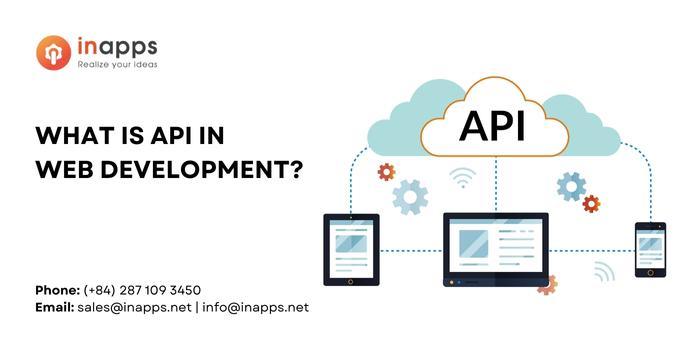
What is api 2022
Key Summary
- Overview: The article explores various types of APIs used in web development, their functionalities, and applications, as presented by InApps Technology in 2022.
- Key Points: What is an API?: Application Programming Interface (API) enables communication between software systems by defining requests and responses. Acts as a bridge, allowing web apps to access external services or data (e.g., payment gateways, maps). Types of APIs for Web Development: REST (Representational State Transfer): Most popular web API type, using standard HTTP methods (GET, POST, PUT, DELETE). Stateless, scalable, and uses JSON/XML for data exchange. Example: Fetching user data from /api/users endpoint. Use Case: Social media apps, e-commerce platforms. SOAP (Simple Object Access Protocol): Protocol-based API using XML over HTTP/SMTP, with strict standards. Supports advanced security (WS-Security) and reliability. Example: Enterprise apps integrating with banking systems. Use Case: Financial services, legacy enterprise systems. GraphQL: Query-based API allowing clients to request specific data, reducing over/under-fetching. Single endpoint (e.g., /graphql) with flexible queries. Example: Querying user posts and comments in one request. Use Case: Content-heavy apps, mobile-first platforms. WebSocket: Enables real-time, bidirectional communication between client and server. Persistent connection for low-latency data exchange. Example: Live chat or stock price updates. Use Case: Chat apps, gaming, live dashboards. RPC (Remote Procedure Call): Executes functions on a remote server as if local, often simpler than REST. Less flexible, focused on actions rather than resources. Example: Triggering a server function like calculateTax(). Use Case: Internal microservices, simple integrations. Key Characteristics: REST: Lightweight, cacheable, widely adopted. SOAP: Robust, complex, suited for secure transactions. GraphQL: Efficient, client-driven, modern alternative to REST. WebSocket: Real-time, persistent, high-performance. RPC: Fast, procedural, less common in web APIs. Implementation Considerations: Security: Use OAuth 2.0, JWT, or API keys; enforce HTTPS. Rate Limiting: Prevent abuse with tools like NGINX or API gateways. Documentation: Provide clear docs using Swagger/OpenAPI. Versioning: Support backward compatibility (e.g., /v1/api). Tools: REST: Postman for testing, Express.js for building. GraphQL: Apollo Server, GraphiQL for querying. WebSocket: Socket.IO, ws library in Node.js. SOAP: Apache Axis, WSDL for definitions. Trends in 2022: GraphQL adoption grows for flexible, efficient data fetching. WebSocket use rises for real-time apps (e.g., collaboration tools). API-first development gains traction with headless CMS (e.g., Strapi). Increased focus on API security due to rising cyber threats.
- What is an API?: Application Programming Interface (API) enables communication between software systems by defining requests and responses. Acts as a bridge, allowing web apps to access external services or data (e.g., payment gateways, maps).
- Application Programming Interface (API) enables communication between software systems by defining requests and responses.
- Acts as a bridge, allowing web apps to access external services or data (e.g., payment gateways, maps).
- Types of APIs for Web Development: REST (Representational State Transfer): Most popular web API type, using standard HTTP methods (GET, POST, PUT, DELETE). Stateless, scalable, and uses JSON/XML for data exchange. Example: Fetching user data from /api/users endpoint. Use Case: Social media apps, e-commerce platforms. SOAP (Simple Object Access Protocol): Protocol-based API using XML over HTTP/SMTP, with strict standards. Supports advanced security (WS-Security) and reliability. Example: Enterprise apps integrating with banking systems. Use Case: Financial services, legacy enterprise systems. GraphQL: Query-based API allowing clients to request specific data, reducing over/under-fetching. Single endpoint (e.g., /graphql) with flexible queries. Example: Querying user posts and comments in one request. Use Case: Content-heavy apps, mobile-first platforms. WebSocket: Enables real-time, bidirectional communication between client and server. Persistent connection for low-latency data exchange. Example: Live chat or stock price updates. Use Case: Chat apps, gaming, live dashboards. RPC (Remote Procedure Call): Executes functions on a remote server as if local, often simpler than REST. Less flexible, focused on actions rather than resources. Example: Triggering a server function like calculateTax(). Use Case: Internal microservices, simple integrations.
- REST (Representational State Transfer): Most popular web API type, using standard HTTP methods (GET, POST, PUT, DELETE). Stateless, scalable, and uses JSON/XML for data exchange. Example: Fetching user data from /api/users endpoint. Use Case: Social media apps, e-commerce platforms.
- Most popular web API type, using standard HTTP methods (GET, POST, PUT, DELETE).
- Stateless, scalable, and uses JSON/XML for data exchange.
- Example: Fetching user data from /api/users endpoint.
- Use Case: Social media apps, e-commerce platforms.
- SOAP (Simple Object Access Protocol): Protocol-based API using XML over HTTP/SMTP, with strict standards. Supports advanced security (WS-Security) and reliability. Example: Enterprise apps integrating with banking systems. Use Case: Financial services, legacy enterprise systems.
- Protocol-based API using XML over HTTP/SMTP, with strict standards.
- Supports advanced security (WS-Security) and reliability.
- Example: Enterprise apps integrating with banking systems.
- Use Case: Financial services, legacy enterprise systems.
- GraphQL: Query-based API allowing clients to request specific data, reducing over/under-fetching. Single endpoint (e.g., /graphql) with flexible queries. Example: Querying user posts and comments in one request. Use Case: Content-heavy apps, mobile-first platforms.
- Query-based API allowing clients to request specific data, reducing over/under-fetching.
- Single endpoint (e.g., /graphql) with flexible queries.
- Example: Querying user posts and comments in one request.
- Use Case: Content-heavy apps, mobile-first platforms.
- WebSocket: Enables real-time, bidirectional communication between client and server. Persistent connection for low-latency data exchange. Example: Live chat or stock price updates. Use Case: Chat apps, gaming, live dashboards.
- Enables real-time, bidirectional communication between client and server.
- Persistent connection for low-latency data exchange.
- Example: Live chat or stock price updates.
- Use Case: Chat apps, gaming, live dashboards.
- RPC (Remote Procedure Call): Executes functions on a remote server as if local, often simpler than REST. Less flexible, focused on actions rather than resources. Example: Triggering a server function like calculateTax(). Use Case: Internal microservices, simple integrations.
- Executes functions on a remote server as if local, often simpler than REST.
- Less flexible, focused on actions rather than resources.
- Example: Triggering a server function like calculateTax().
- Use Case: Internal microservices, simple integrations.
- Key Characteristics: REST: Lightweight, cacheable, widely adopted. SOAP: Robust, complex, suited for secure transactions. GraphQL: Efficient, client-driven, modern alternative to REST. WebSocket: Real-time, persistent, high-performance. RPC: Fast, procedural, less common in web APIs.
- REST: Lightweight, cacheable, widely adopted.
- SOAP: Robust, complex, suited for secure transactions.
- GraphQL: Efficient, client-driven, modern alternative to REST.
- WebSocket: Real-time, persistent, high-performance.
- RPC: Fast, procedural, less common in web APIs.
- Implementation Considerations: Security: Use OAuth 2.0, JWT, or API keys; enforce HTTPS. Rate Limiting: Prevent abuse with tools like NGINX or API gateways. Documentation: Provide clear docs using Swagger/OpenAPI. Versioning: Support backward compatibility (e.g., /v1/api).
- Security: Use OAuth 2.0, JWT, or API keys; enforce HTTPS.
- Rate Limiting: Prevent abuse with tools like NGINX or API gateways.
- Documentation: Provide clear docs using Swagger/OpenAPI.
- Versioning: Support backward compatibility (e.g., /v1/api).
- Tools: REST: Postman for testing, Express.js for building. GraphQL: Apollo Server, GraphiQL for querying. WebSocket: Socket.IO, ws library in Node.js. SOAP: Apache Axis, WSDL for definitions.
- REST: Postman for testing, Express.js for building.
- GraphQL: Apollo Server, GraphiQL for querying.
- WebSocket: Socket.IO, ws library in Node.js.
- SOAP: Apache Axis, WSDL for definitions.
- Trends in 2022: GraphQL adoption grows for flexible, efficient data fetching. WebSocket use rises for real-time apps (e.g., collaboration tools). API-first development gains traction with headless CMS (e.g., Strapi). Increased focus on API security due to rising cyber threats.
- GraphQL adoption grows for flexible, efficient data fetching.
- WebSocket use rises for real-time apps (e.g., collaboration tools).
- API-first development gains traction with headless CMS (e.g., Strapi).
- Increased focus on API security due to rising cyber threats.
- Use Cases: REST: E-commerce apps fetching product catalogs. GraphQL: Social platforms querying user feeds dynamically. WebSocket: Live sports apps streaming real-time scores. SOAP: Banking apps processing secure transactions. RPC: Internal APIs for microservices communication.
- REST: E-commerce apps fetching product catalogs.
- GraphQL: Social platforms querying user feeds dynamically.
- WebSocket: Live sports apps streaming real-time scores.
- SOAP: Banking apps processing secure transactions.
- RPC: Internal APIs for microservices communication.
- Benefits: Interoperability: APIs connect diverse systems and platforms. Scalability: REST and GraphQL support high-traffic web apps. Real-Time: WebSocket enables instant updates. Reusability: APIs reduce redundant coding across projects.
- Interoperability: APIs connect diverse systems and platforms.
- Scalability: REST and GraphQL support high-traffic web apps.
- Real-Time: WebSocket enables instant updates.
- Reusability: APIs reduce redundant coding across projects.
- Challenges: Complexity: SOAP’s rigidity and GraphQL’s learning curve. Performance: WebSocket’s persistent connections strain servers. Security: APIs are attack vectors if not properly secured. Maintenance: Versioning and backward compatibility issues.
- Complexity: SOAP’s rigidity and GraphQL’s learning curve.
- Performance: WebSocket’s persistent connections strain servers.
- Security: APIs are attack vectors if not properly secured.
- Maintenance: Versioning and backward compatibility issues.
- Conclusion: In 2022, as outlined by InApps Technology, REST, GraphQL, WebSocket, SOAP, and RPC APIs serve distinct web development needs, with REST and GraphQL leading for flexibility and efficiency, while WebSocket excels in real-time, requiring careful selection based on project requirements and security considerations.
Types of API
There are 4 main types of APIs(Application Programming Interface) by availability/release policies-
- Open APIs (Public APIs)- Publicly available to developers and other users with minimal restriction. They may require registration, use of an API Key or OAuth, or maybe completely open. They focus on external users, to access data or services.
- Partner APIs- These are APIs Exposed by/to the strategic business partners. They are not available publicly and need specific entitlement to access them. Like open APIs, partner APIs are the tip of the iceberg because they are the most visible ones and are used to communicate beyond the boundaries of the company. They are usually exposed to a public API developer portal that developers can access in self-service mode. While open APIs are completely open, there is an on-boarding process with a specific validation workflow to get access to partner APIs.
- Internal APIs (private APIs)- They are hidden from external users and only exposed by internal systems. Internal APIs are not meant for consumption outside of the company but rather for use across different internal development teams for better productivity and reuse of services. A good governance process consists of exposing them to an internal API developer portal that connects to the internal IAM systems to authenticate and authorize users to access the right set of APIs.
- Composite APIs- Combine multiple data or service APIs. They are built using the API orchestration capabilities of an API creation tool. They allow developers to access several endpoints in one call. Composite APIs are useful in micro-services architecture pattern, where you need information from several services to perform a single task.

Types of API Protocol/Specifications
API protocol/specifications standardize the data exchange between web services. Here, standardization means the ability of diverse systems, written in different programming languages and/or running on different OSs, or using different technologies, to seamlessly communicate with each other.
1. Rest Web APIs (Representational State Transfer)
REST (Representational State Transfer), a web API stands for the production of enterprise-grade web applications. This API uses the HTTP standard to work with resources like CONNECT, TRACE, HEAD, POST, GET, PUT, PATCH, AND DELETE.
Rest API gives you the ability to grow your web development by reusing components without affecting the process as a whole. It aims for fast performance, reliability, and ease of use.
Expedia and Twitter are using RESTful web API to improve their app performance even more. With the ability to support different formats such as XML, HTML, YAML, and JSON, REST is the indomitable choice for building custom web applications.
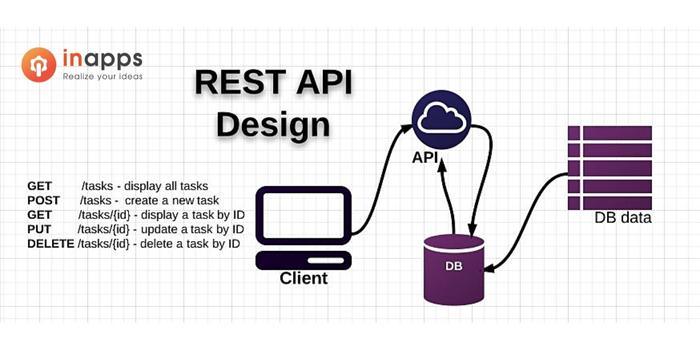
REST stands for the production of enterprise-grade web applications
Benefits of REST Web API
- It requires minimum bandwidth to build apps
- It is driven by data, not functions.
- It has easy guidelines to follow that allow developers to build applications easily.
- Works on JSON that supports only text and numbers.
- REST web APIs are optimized for the web apps.
- Uses a single uniform interface.
2. SOAP Web APIs (Service Object Access Protocol)
SOAP works in a decentralized distributed environment to maintain the communication between request and response messages sent by web applications.
SOAP web API supports XML format that is a very flexible text format used to exchange information over the internet or other web networks. XML defines a set of rules for the security of documents for both humans and machines.
Eventually, every web application will need a SOAP web API (Service Object Access Protocol) to ensure the security of transmitted data of your app.
SOAP web APIs are suitable for building payment gateway apps, CRM solutions, identity management as well as telecommunication services. PayPal is using SOAP APIs. Amazon is also using SOAP and REST APIs to expand data storage on professional web applications. Similarly, SalesForce API using SOAP web APIs to implement custom features to pre-build web applications.
Benefits of SOAP Web API
- SOAP web APIs are driven by functions
- Adds more security to web applications
- It has strict rules to follow for developers
- Works on XML that support various images, graphs, charts, numbers, texts, etc.
Please note- If you’re looking to build your business valued web app on SOAP APIs, build a comprehensive range of API customization services with the help of experienced API developers.
3. RPC Web APIs (Remote Procedural Calls)
RPC web APIs are the simplest form of the APIs listed here. These APIs work on the principles of Remote Procedure Call that specifies the interaction between client-server-based applications.
RPC web APIs are also known as the “function call” or “subroutine” in which one program or client requests for data from the server and the server sends the required response to the client. Briefly put, RPC web APIs are about sending a message that might end up storing information in the database to keep a history.
Benefits of RPC Web API:
- RPC web APIs are great for adding commands and procedures.
- A great option for making CRUD (create, read, update, delete) to your app data.
- In RPC only GET (for getting the information) and POST for modifying information are used.
- Support both data types JSON and XML.
Types of API by Use Cases
APIs can be classified according to the systems for which they are designed.
- Database APIs- Database APIs enable communication between an application and a database management system. Developers work with databases by writing queries to access data, change tables, etc.
For example,-The Drupal 7 Database API allows users to write unified queries for different databases, both proprietary & open source (Oracle, MongoDB, PostgreSQL, MySQL, CouchDB, and MSSQL).
Another example is ORDS database API which is embedded into Oracle REST Data Services.
2. Operating systems APIs. This group of APIs defines how applications use the resources and services of operating systems. Every OS has its set of APIs, for instance- Windows API or Linux API(Kernel-user space API & Kernel internal API).
Apple provides API references for macOS and iOS in its developer documentation. APIs for building applications for Apple’s macOS desktop operating system is included in the Cocoa set of developer tools. Those building apps for the iOS mobile operating system use Cocoa Touch – a modified version of Cocoa.
3. Remote APIs- Remote APIs define standards of interaction for applications running on different machines. In other words, one software product accesses resources located outside the device that requests them.
Since two remotely located applications are connected over a communications network, particularly the internet, most remote APIs are written based on web standards.
Java database connectivity API and Java remote method invocation API are 2 examples of remote application programming interfaces.
4. Web APIs– This is the most common API class. Web APIs provide machine-readable data and functionality transfer between web-based systems which represent database management systems.
These APIs mainly deliver requests from web applications and responses from servers using Hypertext Transfer Protocol (HTTP).
Developers can use web APIs to extend the functionality of their apps or sites. For instance, the Pinterest API comes with tools for adding users’ Pinterest data like boards or Pins to a website. Google Maps API enables the addition of a map with an organization’s location.
In Conclusion
- After learning about different types of API, we now know that its not possible to have only one web API. And, it is obvious that your web application can easily work on multiple web APIs/ additional services.
- As the businesses have started looking to add more dynamic systems to their apps the importance of web APIs (Application Programming Interface) has increased hugely in building dynamic enterprise-grade applications.
- However, you have to make a choice between the rules of REST, SOAP, or RPC and then you would have one web API for your web application development project.
- Knowledge about the web APIs is greatly useful, when you are planning to work on a new project of web app development.
- It can be also helpful when you are working on the features for your existing web APIs.
- It is crucial to choose the right web API that addresses the need of your business model and the need for your application development or program.
- An efficient API developer must know that one of the biggest challenges of building an app with API is choosing the one that will last.
We at InApps are focused on delivering excellent development services and also fulfilling your app maintenance needs. We take great pride in our best remote Node developers, React developers, coders, engineers, freelancers, architects, and consultants.
Top companies and startups hire remote API developers for their Products, Projects, MVPs, and Proof of concepts (POC). Hire InApps API developers to make your application strong in performance, reliability, and scalability.
We hope you have gathered useful information about types of API and which one is right for a particular project.
FAQs
- What is API in web development? API stands for Application Programming Interface. A Web API is an application programming interface for the Web. A Browser API can extend the functionality of a web browser. A Server API can extend the functionality of a web server.
- Is an API free? An Open API may be free to use but the publisher may limit how the API data can be used. They are based on an open standard.
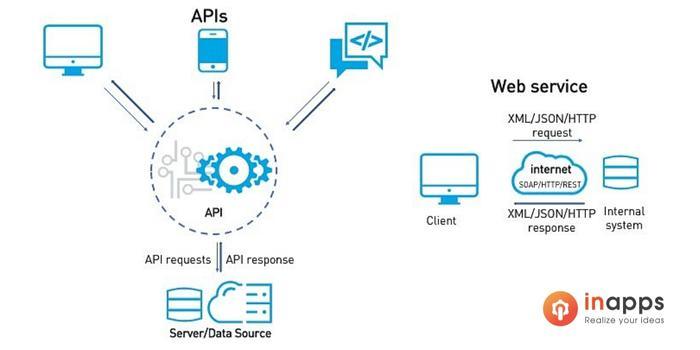
- Is API a Web service? Web service is a collection of open-source protocols and standards used for exchanging data between systems or applications whereas API is a software interface that allows two applications to interact with each other without any user involvement. All Web services are APIs but all APIs are not web services.
- Which is better Web API or web service? Web service is used for REST, SOAP, and XML-RPC for communication while API is used for any style of communication. Web service supports only HTTP protocol whereas API supports HTTP/HTTPS protocol. Web service supports XML while API supports XML and JSON. All Web services are APIs but all APIs are not web services.
List of Keywords users find our article on Google
[sociallocker id=”2721″]
salesforce api
hire xml developers
what is an api
custom application development
api stands for
hire api developers
expedia api
drupal api
hire google api developers
hire soap developers
hire cocoa developers
rest api orchestration
hire rest api developers
salesforce soap api
hire linkedin api developers
hire authorize.net developers
hire remote json developers
oracle ebs crm reviews
salesforce mobile publisher
hire json expert
hire google api developer
hire google maps developers
building enterprise-grade blockchain databases with mongodb
hire facebook api developers
remote drupal jobs
soap api salesforce
hire oracle forms developers
drupal developer rates
salesforce rest api
how many salesforce mvps are there
oracle call interface programmer’s guide
hire amazon api developers
soap api
remote drupal developer jobs
salesforce api documentation
linkedin api
salesforce apis
salesforce crm developer api
drupal 9 form api
what is meant by api with example?
rest api developers for hire
hire expedia developers
rpc jobs
mvp.xml
oracle outside in technology
web services in java
hire t sql developers
mongodb java api example
hire api developer
planning center api
“web application development”
different kinds of api
kinds of api
top apis 2022
soap api developer guide
oracle java api
oracle rest api
hire twitter api developers
“web development”
hire linkedin api developer
rest api for oracle
type of apis
types of api services
api development technologies
different kind of apis
hire remote xml developers
hire twitter api developer
different api
oracle ords
will apps eventually make the web irrelevant? why or why not?
developer guide salesforce
salesforce developer guide
api website development
befree company wikipedia
hire remote oracle developers
salesforce api development
hire oracle forms developer
hire web ws security developer
hire xml developer
remote xml developer jobs
public-apis
salesforce api version
hire remote html developers
hire remote rest api developers
freelance xml
hire api gateways developer
hire salesforce rest api developer
salesforce restriction rules
web developer api
hire facebook api developer
restriction rules salesforce
oracle ords example
hire high charts developer
linkedin rest api
salesforce soap api documentation
salesforce api guide
salesforce composite api
hire json developers
hire styled system developer
hire remote api developers
web api salesforce
composite api salesforce
how to find the api version in salesforce
twitter developer api
hire remote postgresql developers
soap logo design ideas
xml publisher in oracle apps
hire remote linux developers
hire remote mongodb developers
hire remote t sql developers
drupal 7 commerce paypal
remote api developer jobs
oracle rest data services
partner object salesforce
wawa uniform
best free apis 2022
drupal core
drupal freelancers
couchdb java client
distributed data warehouse wikipedia
eve api key
api in it
linkedin api developers
apple ios developer documentation
google related keywords api
hire google maps developer
hire remote drupal developers
salesforce.com api
soap-rpc
api technology
drupal commerce core
hire facebook sdk developer
ords oracle
types of api architecture
rpc customer centricity
salesforce address standardization
salesforce api rest
drupal 9 json api
drupal xml sitemap
hire remote crm developers
hire web api developer
linked in api
custom budget api
mongodb java api
hire rest developer
drupal jobs remote
eve online api
consultant api
couchdb java api
salesforce partner object
api salesforce
drupal json api
drupal restful web services
hire t-sql developers
java web services
twitter developers api
api linkedin
cocoa developer
drupal qa
expedia xml
hire oracle developers
how to become api developer
iam api
rest api documentation salesforce
restful web services java
salesforce api user
success factors api
twitter api json
drupal 7 rest api example
enterprise architect web interface
twitter api status object
api keyword search app store
blockchain developer remote
facebook workplace api
programmer’s guide to drupal
twitter developer portal
hire remote fintech developers
crm web api
salesforce ui api
tweet.fields twitter api
twitter restful api
what is web api
branch api
design and build great web apis
workflow java api
applications of the unified protocol
knowledge api salesforce
niche design architects
validation rule on delete salesforce
whatsapp web api free
whatsapp web business api
whatsapp web api
web whatsapp business api
whatsapp public api
api web whatsapp
whatsapp business web api
whatsapp business api client
whatsapp business api multiple users
whatsapp enterprise api
whatsapp open api
what rest api
[/sociallocker]
Rate this post
Surviving the 3 Fallacies of Learning to Code – InApps 2022
Related Articles


Want to apply these insights?
Our AI architects offer free 45-minute consultations to discuss your specific use case.
Book a Discovery Call